One Way Vision Printing: What It Actually Looks Like From Both Sides
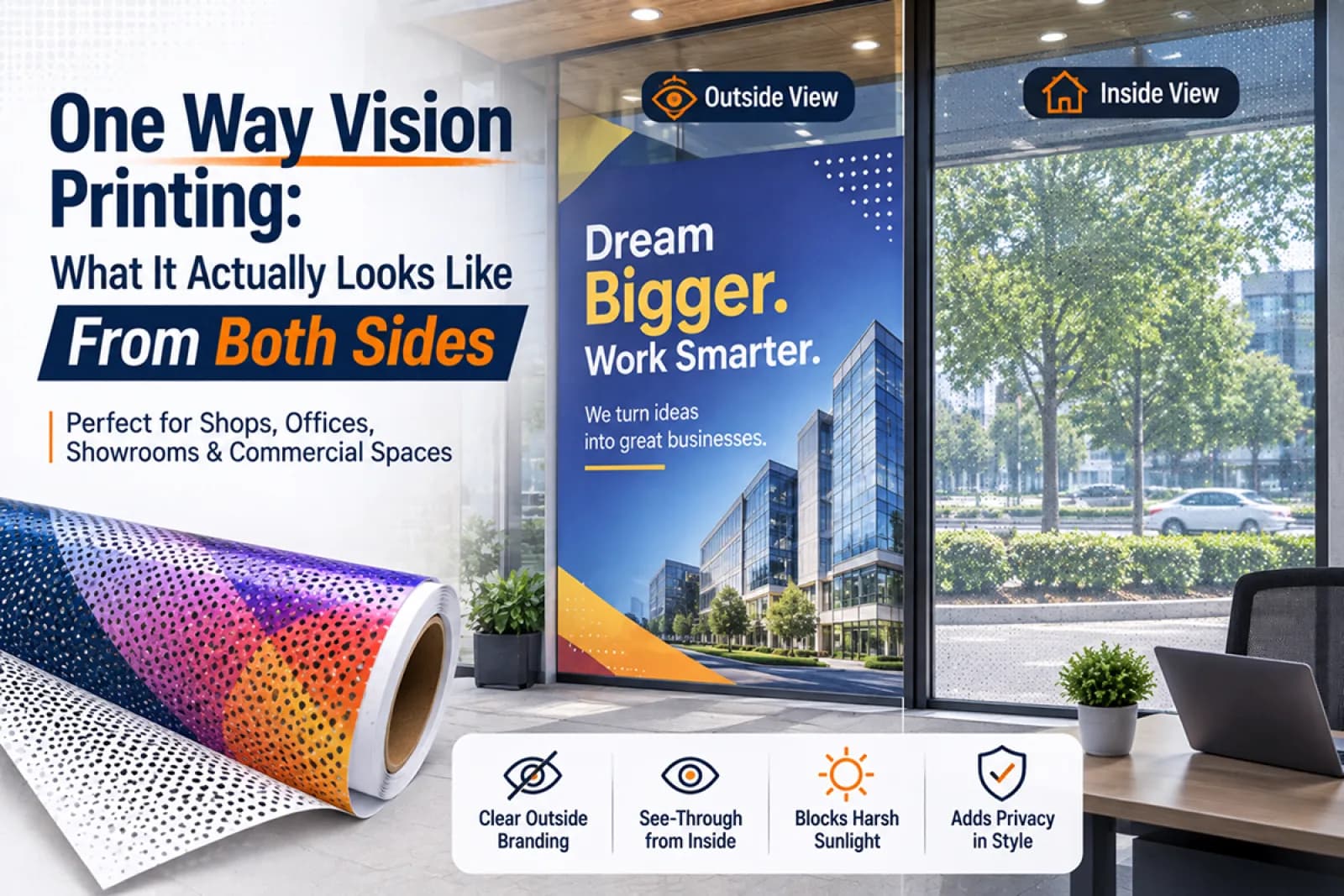
One way vision film gets described in ways that make it sound more mysterious than it is — "you can see out but nobody can see in" — which isn't quite accurate and sets the wrong expectation. What's actually happening is simpler: the film is perforated with thousands of tiny holes, roughly half the surface is solid film and half is open space, and your design is printed across the solid half.
From outside, standing at normal viewing distance, your eye blends the tiny holes together and you see a complete, solid-looking graphic — a shopfront ad, a vehicle wrap covering the rear windshield, whatever the design is. From inside, looking out through the same material, you're looking through what amounts to a fine mesh screen. You can see out — shapes, movement, general light levels — but it's dimmer and less sharp than looking through clear glass, more like looking through a screen door than looking through nothing.
This matters most for two situations: shopfront windows where you want full-window advertising without turning the interior into a cave, and vehicle rear windows where a full wrap would otherwise block the driver's rear visibility entirely. For a display window where nobody's sitting behind it looking out, solid vinyl often makes more sense — no reason to accept a slightly softer print for visibility you don't need.
The print itself needs a bit more thought than a solid vinyl print — because half the surface is holes, we adjust contrast and colour saturation during output, since printing the raw file at the same settings as solid vinyl comes out looking washed out once installed. This isn't extra cost, just a different setup on our end.
One practical note: it needs reasonable light on the interior side to see through comfortably. A well-lit shop looking out through one way vision film works fine. A dim stockroom behind it will feel more shut-in than someone expects.
Frequently Asked Questions
Less effectively than during the day — if there's more light inside than outside (common at night, lit interior vs dark street), the visibility can partially reverse, and people outside can see silhouettes/shapes inside more than they could during daylight. It's not a privacy guarantee after dark the way it is in daytime.